miércoles, 26 de junio de 2013

A visit to Valencia Huerta, Fertile Land Surroundings, paella festival

To get across the fertile land and vegetable patchs north of Valencia, huerta, is a pure delight for the senses as we got experience recently leading as a Tourist guide the Vera group.
This land, known as Cabanyal, is located close to the well known Poltyechnical University, and can be designed as our "garden of Valencia" at a threw of stone, That's the title of a recent TV program, where the news reader described this landscape as one of the most fertile soils in the world, with an irrigation system that keeps going on since its beginning in medieval times and some farmhouses known as “alquerías”, representing at all an example of coexistence between cultures and with nature. As stated by Carl Steinitz, professor of Landscape Architecture at Harvard University, it should be a unique space in the world but also one of the few of its value without a uniform and constant planning management.
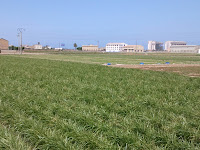
                                                        
                                                            Huerta of Valencia                Typical Barraca
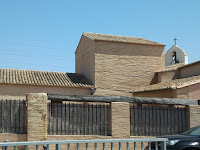
In the eastside, we remark some heritage as the canal or water-ditch of Vera and the Catholic hermitage of Notre Dame of Vera. The group prepared and enjoy a full taste traditional paella in one of the farmhouses, the Carmen House.
                     
 Carmen Farmhouse                            Vera Eremitory

Besides is located The Mariluz Farm, next to ours, where it is offered affordable menus for visitors, with the opportunity to share a landscape that scholars and students compare with that of France. Also in the garden of Alboraya can on pick up those vegetables that enter in the paella receipt and the valencian salad and enjoy in their own place the local production, as tasting a traditional “horchata” drink .

In the neighboring Cabanyal district, we can mention, the French botanist and adventure Felix Robillard, which led to the first integration between landscape and agricultural industry, an industry related also with flowers, herbs and perfume. Crossing the “Cabanyal”, at the half of the nineteenth century was a sort of adventure because of its vegetation that looked like a swamp, whose barriers were saved by boat. The area was a marsh. This happened until the Frenchman Felix Robillard bought 361,526 meters square of land with the idea of ​​rehabilitating the area. The gardener and botanist dried out the ground and used for this purpose several plant species, including large amounts of "geranium odoratissimun" the popular Malvarrosa. Robillard divided his property into three main areas: his house at San Rafael, the essences factory, next to it the area where species were planted for making oils, perfumes, and soap.
his Venture has today a square dedicated to his name where oncce stood the family house with 22 rooms and a garden of 6848 meters, according to the the researcher and writer Antonio Sanchis in his book on “Malvarrosa” . This factory was the first of this essences established in Spain and the first of toilet soaps and perfumery established in Valencia.
Next to the shrine of Vera, we further observe a property known as  Hort dels Misteris. The name “pass” well to the environment since then from childhood we were surprised of that very mistery dense of palm trees vegetation surrounded by a high wall and that farmhouse at the background you could barely imagine all sorts of ghosts or crimes inside. The farmstead is now known as Robillard, residing there several descendants of the French gardener, including a great-grandson. They bought the manor 25 years because it resemble to that of their predecessor. 
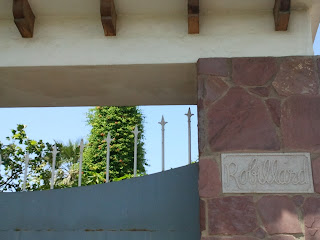
                                 
                                       Robillard's Manor Entrance
The farmhouse was built by the manufacturer Vicente Tatay Mandingorra. The designer of the garden was his son Francisco Garrido. The Priest, Father Luis Fullana, who had a good relationship with Tatay, wrote in there most of his works about valencian language and celebrated Mass in that chapel that no longer exists.
 Hort dels Misteris con sus palmeras


lunes, 3 de junio de 2013

Valencia Seashore and the Constant Gardener

 
The tour guides often approach to the harbor of Valencia to teach foreigners about our Gastronmy, Valencian Paella and stories from the past of Valencia. We like to remember them the source of our most popular beach and the person who was responsible of its naming.
Inicio de la pesca en Malvarrosa
Regreso al atardecer

It was a person named Felix Robillard. He came from France and was a reknown botanist who settled in Valencia in mid-nineteenth century and could be called the Constant Gardener, becaus of his constant working on behalf of the city.
This botanist begun its illustrious career at the "Jardin des Plantes" in Paris. He went on to become the head gardener at the “Champs Elysees”. In 1848 he moved to Valencia where he was designate "Gardener" of the local botanical garden. Later settled in present Malvarrosa district. La Malvarrosa was at that time a marshy land that Robillard patiently dried in order to plant several aromatic herbs. He devoted his time to cataloging our Mediterranean plants, more than 60,000 plant species and the modernization of agriculture in Valencia.
 In industry he specialized in the cultivation of a variety of geranium, "Pelargonium capitatum", a plant native of Green Cape at South Africa, commonly known as “malvarosa”". 
Mata de malvarrosas
Flor de la malvarrosa


The seedling will later name this popular waterfront district. Robillard pressed this flowers to achieve their oils and essences in a modern perfumes production plant. These essences were presented at the London Exhibition of 1862 and that of Paris in 1867, gaining an international recognition.
It was the most illustrious son of this former fishermen village, with the famous local writer Vicente Blasco Ibanez, who had his residence beside the beach in the early twentieth century.
Balneario de las Arenas, comienzos siglo XX
Jóvenes años 20 disfrutando del balneario


By that time Malvarrosa beach became a major social center and meeting point of Valencian society, famous for its spas and thermal waters imitated from France.
Currently the main spas resort was transformed into a luxury hotel and the beach was improved with its wide promenade also extended by the recent "The Patacona Beach".
Actual Paseo de la Playa de la Malvarrosa, homenaje a la pesca tradicional

To remember is to recreate the passed time.

jueves, 16 de mayo de 2013

Ranera- Peak Tour

-->
The Valencian Community is not only an extensive coastline with sandy beaches and cristal water gulfs but also boasts of beautiful mountain scenery inside. This time, the montain group FED visited the Pico- Ranera, and in the mountains of Cuenca, at the limit with Utiel. Splendid views worth of a visit.
-->
The climb up to its some 1400 meters took us around one hour and a half by the south-east line.
.
Ranera Peak top woth amazing Stone-labs as overview marks or "Talayuelas"

-->
Pico Ranera at its top has a plenty of beautiful stone slabs from hence one can stand as an a plen. Hence come the spanish ancient name Talayuelas from “atalaya”, sight-point.

Vistas de vértigo


-->
At the top of the mountain, a clear day of May, we enjoied splendid views of the capricious open slate blocks into the abyss, and the grotesque shapes of centenary white pines.
Some views of vertigo.
-->
Our eyes discovered to the northeast Javalambre and the valley that opens up Guadalaviar River through the city of Teruel, in the background, to the north the Sierra de Albarracín with, and westwards could we glimpse the mountains of Cuenca while to the south, Benageber reservoir, near Líria.
Geodesic apex


-->
We shared a tasty lunch of tapas: cheese and country ham, washed down with red loca Bobal wine from Utiel area.
.
Greeting other climbers with our Mountain guide, Paco of Ademuz
El descenso por un bosque de vino rodeno nos llevó hacia la resinera que pretende recuperar el uso artesanal de este derivado de los pinos para barnices de uso industrial

-->
The descent through a forest of red Pines took us back to a restaured resine factory, traditional working of the mountain farmers, whoe make use of this derivative of pine for varnishes in furniture industrial.
-->
Leaded up by our mountain guide, Paco de Ademuz, we enjoyed a pleasant day we invite you to share.

Visit and follow us
Jvn
JVN

miércoles, 15 de mayo de 2013

An orange Around the World

-->
Did you know where does it come from the name “orange” and other curiosities of Valencia?

The name “orange” comes from the old Provencal auranja meaning "golden color-like", which results in Spanish naranja. The term would come from Indian languages like Sanskrit which contains the prefix naru/nari which in the sense of “fragrant”. Then golden-color and fragant-smell are the two most important qualities of this exotic fruit. In German, another name is "Chinish apple" (Apfelsinne). Oranges were known in the Middle Ages since they came from Persia and bitter- orange ornamented gardens and patios of Andalusian style. In the fifteenth century sailors brought the first sweet orange to Portugal and Spain around 1560. It came first from India to african lands as Mombasa (Kenya). Were they small varieties such as tangerine or mandarine?

                                        Orange production in the world, 2010
The truth is that in Valencia, specifically Carcaixent tradition exists according to which around 1781 the priest Vincent Monzo begun to dedicate dry-land to cultivate the first commercial orange fields. He had tasted first the oranges from the nearby closter of a Dominican sisters convent and liked the taste. That same year he asked the the pharmacist Jacinto Bodi to bring back some small Lemon Tress from Murcia in order to make a graft of tangerines on them., of neighboring Murcia feet of sweet orange grafted lemon. This day was to born the sweet big orange of an appreciable size. The notary of the town Carlos Maseres, join the venture, and create the conditions for exploitation in irrigated lands and the basis for export through the port of Denia, Gandia and Valencia to northern Europe, as well as by railroad since 1855.
The orange and the Mediterranean diet
The best known varieties begin in Seville and Valencia, with tangerine and clementine, follow with the Navel, Navelina and Sanguine crops and end by June in Valencia itself with the variety Late (or Navel-Late).
The most recognized variety because its flavor is the Navel orange. Its origin is worth a look back to History. The Spanish and Portuguese navigators from the sixteenth century carried the Orange to South America. Three centuries later, in 1820, in another monastery, this time in Brazil, there was a second mutation resulting in the "orange-navel", whose main feature was that at the base of the fruit, just to the other side of the peduncle , a small atrophied orange that resembles a navel appeared. The Brazilian monastery became a source of continuous cuttings because otherwise there was no genetic variation at the tree. Next was developed a new one, called "naveline" with a crust easy to peel and the aforementioned "navelate". 
                                                   
                                                                                 
                                                                                   Navel Orange

Carcaixent, Algemesí and Alzira, the river Xuquer Bank (“Ribera alta) offer top quality oranges of this kind.

With regard to its marketing should be mentioned that as well as in Andalucía some British families reamined after the war against Napoleon, as those names like “Osborne” and “Domec”. In Valencia the same happened with other families, some of Irish origin, as the “Trenor” one, who engaged in the export of this “golden fruit”, obtained large tracts of land and and ascended in social status getting wuch titles as “Marquis”. They finnally bought a well-known monastery of name “San Jerónimo de Cotalba”, protected in past times by the Borjas Family.
Orange also has been the subject of artistic designs around the world to show how nice and tasteful orange circles the world.

                      
Small Orange-Snake

                                                        Orange designed by a Mexican artist

Finally at our tour around this region, we made a short stop at the “Huerto de Maseres” and -why not?- at an splendid lunch at the leisure area surrounding the Garden of Soriano. Is it not like an italian Tuscany in Valencia?

             
                  "Hort de Soriano"                                      "Hort de Masseres"


Overview on the "soriano" valley
                                                                                       

Thousands of foreigners visit this land why don't you?
Jvn

miércoles, 24 de abril de 2013

Puerto olímpico de Valencia y pasión por lo retro ( serie de TV "El Barco")

El domingo pasado, 21 de abril, tuvimos la ocasión de asistir a una Feria náutica en el puerto de Valencia,
en la cual vimos atracados espalda con espalda, la réplica de la "Nao" Victoria, con la cual Juan Sebastián el Cano dio la vuelta al mundo en 1519-22 con un bergantín más moderno.
Nautica en Puerto de Valencia, abril 2013

.
La Nao Victoria disponía  de 3 cubiertas, sentina, bodega, cubierta principal, castillo, toldilla y
tolda, zona noble (camarotes del capitán) y áreas de vida a bordo (cocina, bodega,
espacios de la tripulación y del servicio). Su pasaje era de unos 50 marineros y unas 90 toneladas marineros de los que tan solo 18 la acabaron tras descubrir las islas Filipinas, donde pereció el otro comandante de la expedición, Magallanes.
Réplica de la Nao en Canal Veles i Vents

 
Existen dos réplicas, una realizada en Argentina, a orillas de la bahía de Magallanes,concretamente en Punta Arenas, con un Museo temático. Y la que visitó Valencia y construida con motivo de la Expo de Sevilla de 1992.
También pudimos visitar el buque Miguel de Cervantes construido en 1934 como bergantín-goleta  por un astillero sueco y botado en Gran Canaria . Con un trapo de 16 velas fue utilizado como yate de recreo con una capacidad para 36 pasajeros y 11 tripulantes. La Cervantes fue trasformada en bergantín educativo en Portugal entre 1978 y 1981 y Camilo José Cela la convirtió por un tiempo en Universidad flotante en honor a Cervantes.
Cervantes Saavedra / Estrella Polar en Valencia

Gobernando el timón
Vista general

Cervantes Saavedra a todo trapo
El Cervantes Saavedra,fue  rebautizado como el buque escuela Estrella Polar en 2011 a bordo del cual ha trascurrido la serie de Tv El Barco. Su argumento ha sido constituir el hogar durante  meses será el hogar de un grupo de 12 personas que buscan un cambio de rumbo en sus vidas, a imitación de otro Reality rodado en Inglaterra.
Sala de estar a popa
Bar de popa


Tuvimos la ocasión de asistir también a una ginkana de los populares cuatro-cuatro y finalmente, con el grupo austriaco nos dimos una agradable vuelta con la barquita (Albuferenc) por el lago de la Albufera.


jvn
Visita Valencia con nosotros

lunes, 15 de abril de 2013

Old Jewish District of Valencia: public (Hamman) and Ritual Batahs (Mikweh)


Old Valencia Jewish district
The old Jewry of Valencia, called El Call, after the conquest of Jaime I (1236), spread along the northern side of the present Calle de la Paz (Peace Street) to the south. Among the most remarkable buildings from jews past we can highlight the bathrooms and the Butcher's, and near the present “Plaza de la reina” was located the Jewish Market or Suk

                                
                                        Map of Islamic Valencia (Sanchis Guarner)
Following this map, entering the portal de la Figuera we have at the map the Jewish baths just below.
 
Jews baths were of two types, public and rituals (in Hebrew called miqweh) and they represent an institution both hygienic and religious.
We must then diferenciate between public and ritual bath (Miqweh) within Judaism. 
                             
                              Valencia Medieval District at Medieval Time

Public baths in many parts of Spain were know as a Hamman , and the institution was shared betwen jews and muslims, and afterwards wiht christians too. The Jewish Quarter of Valencia were indeed very similar to the Arab baths and the late one also influenced the Christian Bath Institution still surviving in the city, with their warm rooms in the center and both hot and cold at both sides. In Valencia we had of this type the well knowb "Baños del Almirante ((Admiral Baths) of Christian period (1320). 


Similars and  olders in  Medieval Spain, known as Sefarad, are those of Saragoza, of jewish origins and arabic influences, with its columns much like those of our "Baños del Almirante". These baths of Zaragoza are cited in some documents from the thirteenth century, the earliest reference corresponding to 1266. They are located in the Jewish quarter opposite the fortress called "Castle of the Jews" (a complex with jail, synagogue, hospital, butchers). Today it remains only a part of the baths : a room, of substantially  rectangular section with vaulted ceiling, covered with 8 point-stars lighting windows. This large room could communicate with another room colder vaulted with a two arched section perhaps the caldarium and frigidarium. They are XIIIth century Mudejar (moors living under christian rule)  with formal elements of christian Cistercian style.
 
   Jews Baths of Saragosa                                 Small Room

The next step was the ritual Bath or Miqweh. To participate in the ritual bath, the Jewish oral tradition of the Talmud requires the cleaning of any physical dirt, before gaining admission to pass the second barrier of physical and spiritual purification. The ritual bath is attached to the synagogue. Oral Law speaks about natural waters of "sources and wells" (Leviticus 11:36). To participate in the liturgy of the Jewish Temple and Jewish piety ceremonies one had to be purify of such contamination as the menstrual period by means of the immersion of the whole body in a ritual bath. The Talmud describes how it should be built a “Mikweh” and its conditions. Therefore, the entrance to the public baths preceds the miqweh immersion. In biblical times John the Baptist reshape this purifying sense to penitential one and Jesus focused on the personal sanctification. Archaeologists have found in Qumran baths from I century b.C and in the Judeo-Christian period others have been discovered in Nazareth, with seven steps of descent and ascent that symbolizes the new creation of the person . 


 Ancient Miqweh at the Holy Land
The source of ritual bath water should be running canals or rain water when gathered in an underground cistern.
 
 The characteristics of the ritual bath or Miqweh can be observed which is in the town of Besalu, near Girona. It is the only of its kind discovered in the Iberian Peninsula and of the few known in Europe.
                                                          
                                                                    Miqweh of Besalu
Now we are already able to answer about two questions: Was there a public jew bathhouse in Valencia? Yes and possibly it followed the pattern of Zaragoza Hammam and in Valencia were it was located near the Portal de la Figuera.
Did we have a Mikweh in Valencia? We do not have the security whether about this point nor about the site, but they would probably located between the public baths and the synagogue. In the village of Sagunto, 30 km north to Valencia, a supposed miqweh house has been discovered, dating from the fourteenth century, in the so called Casa dels Bereguer. The room is vaulted and retains the ancient seven steps symbol, and the tank that was used to collect rainwater.
                            
Supposed Miqweh of Sagunto


miércoles, 13 de febrero de 2013

Modernist Art Temporary Exhibition in Valencia: Sorolla and Benlliure


We were at the Bellas Artes San Pio V (Fine Arts Museum). There we assisted to the new temporary exhibition about Clotilde de Sorolla, the wife of the famous Valenican painter Joaquín Sorolla (1863-1923). About 20 paintings and 25 drawings that deal with the wife and muse that constantly accompanied the artist, from his youth until the painter's death. Their romance started around 1879, in their youth. The visitor, through light paintings, enables to open the door to the privacy of the family of Joaquin, a painter of light in Valencia and expressiveness of the look of his woman, laughing, playing and accompanying the birth of their children. 

            Fishermen                Royal Bridge in Valencia
Another set of pictures show us portraits reading in the garden of his home in Madrid. The last section shows Clotilde assisting to the creation of the last art-pieces and having vaccation and leisure around Spain. Finally, Clotilda takes care of her husband at the last days and the public impact of his death.
                                       Clotilde de Sorolla in Blue dress

Alongside this exhibition visit please the pavilion dedicated to Mariano Benlliure in a small chapel next to the Jardines de Viveros (Royal Gardens) where one can admire the artistic talent of a contemporary of Sorolla, the Sculptor Mariano Benlliure. Between different sketches turning around nature and dame portraits you will admire the splendid mausoleum of the great Toreador of the beginning of XXth Century, Joselito. This splendid bronze piece represents the devotional line that accompanied crying his coffin in his last paseíllo (walking ceremony before the corrida)till the cemetery. José Gómez Ortega was a bullfighter of gipsy background who reached the summit of this art, according to his critics. But around 1920, he failed in Madrid, and agreed to fight a corrida in Talavera, with his brother in law Ignacio Sanchez Mejias. That was his very last one. The fifth bull' sharp horns pierced his stomach and he died. The famous sculptor of this time, Benlliure composed the sculpture in 1926, and it was exposed to the public at the Palace of Fine Arts, settling permanently in the Cemetery San Fernando of Seville.
 
Sketch for the Mausoleum of Joselito


Mausoleum of Joselito in San Fernando 
Cemetery of Seville


JVN